In the ever-shifting landscape of gaming, players often find themselves pulled in multiple directions, caught between the warm embrace of nostalgia and the sharp thrill of new discoveries. This week, a diverse group of gamers has been navigating this spectrum, from dusting off classic handhelds to wrestling with modern tactical challenges and Steam sale indulgences. Their experiences, like scattered puzzle pieces from different boxes, reveal a picture of what captivates players in 2026—a mix of stubborn perseverance, chaotic fun, and the quiet satisfaction of finally ticking a legendary title off the list. The games they choose are not just entertainment; they are time capsules, skill tests, and sometimes, unexpected companions.
Revisiting the Past: The Urbz and Its Unforgiving Charm
Kelsey recently felt the pull to revisit the Nintendo DS library, specifically the quirky world of The Urbz: Sims in the City. This title presents a unique, and often frustrating, balancing act between managing a Sim's basic needs and cultivating their social relationships. The payoff, however, is witnessing the delightfully absurd narrative of Daddy Bigbucks' dramatic downfall. The game's unapologetically goofy tone and story-driven focus represent a bygone era of Sims console spin-offs, a style that many fans, including Kelsey, would love to see make a comeback. It’s a testament to how some game designs, like a vintage vinyl record, possess a specific charm that modern iterations often smooth over.
The Struggle is Real: Tactical Trials and Chaotic Walks
For Ed, the week has been defined by a determined, if painful, education in Final Fantasy Tactics. As a series fan coming to this classic for the first time, expectations were stratospheric, but the reality has been a series of humbling defeats. The game's renowned depth, particularly its intricate Job system, is both its greatest strength and a significant barrier to entry. Ed notes that despite quality-of-life tweaks in the re-release, the game does a poor job of explaining its own complexities, leading to long sessions of menu tinkering followed by battlefield failure. Yet, the compelling political narrative, gorgeous hand-drawn art, and the iconic tone—which clearly inspired later entries like Final Fantasy XVI—have their hooks in deep. Sticking with it is a point of pride.
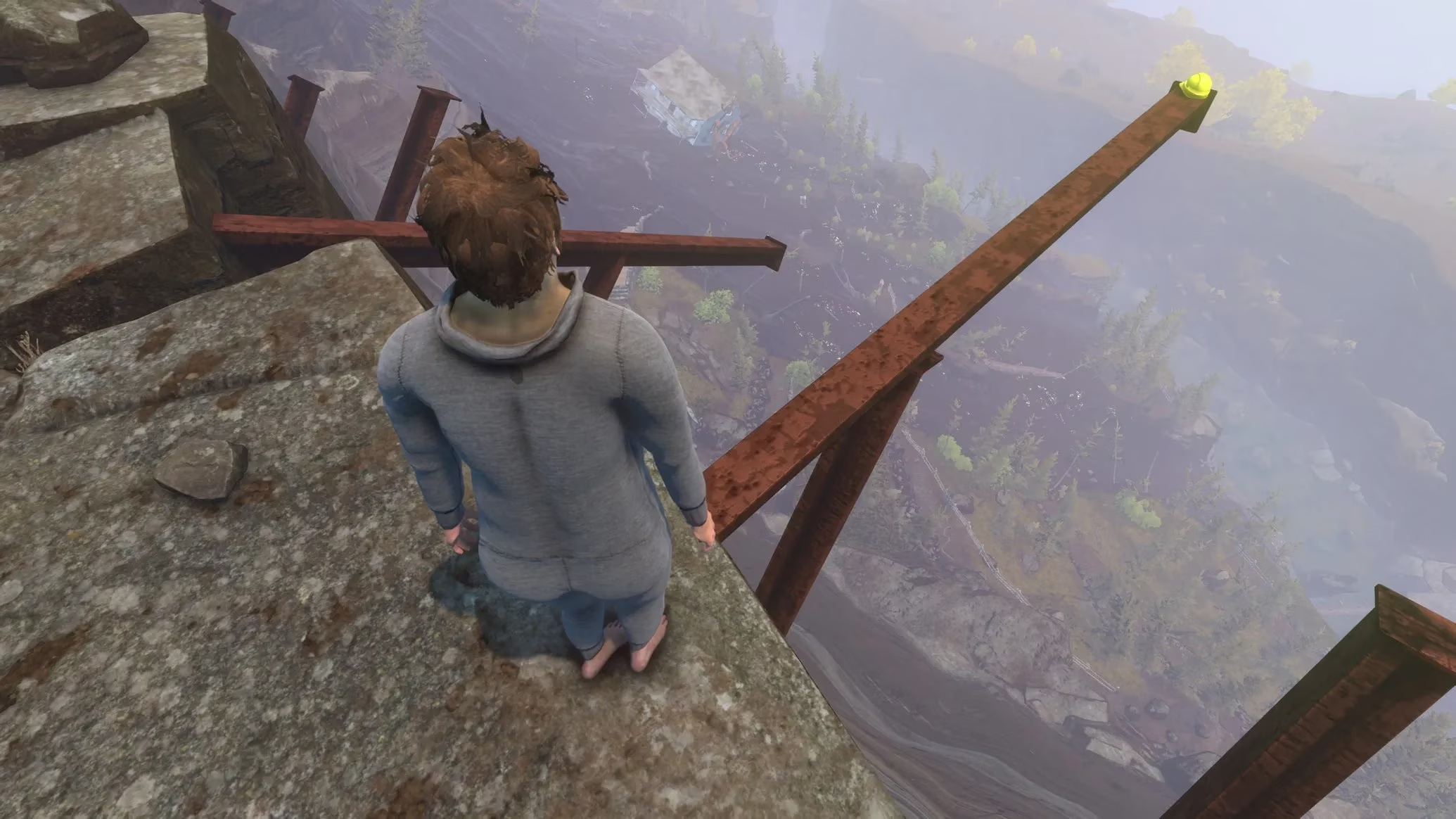
In a completely different vein, Tom found himself in a comedic struggle with Baby Steps, a game he describes with a wry smile. After deliberately ignoring the game's suggested path, he found himself stranded at the bottom of a treacherous, muddy incline. A plea for help to a colleague yielded only the stubborn, Zen-like advice: "The only right way is up." This moment perfectly encapsulates the game's masochistic appeal, presenting mundane traversal as an absurdist challenge.
Pure, Unadulterated Fun: Wobbly Life and Steam Sale Sprees
Sometimes, a game's greatest virtue is its ability to not take itself seriously. Marie discovered this with Wobbly Life, a title that unexpectedly became her go-to evening relaxation. The joy is in the simple, chaotic freedom: stealing a neighbour's space hopper to bounce over a bridge, parking a helicopter in the middle of the road, or taking on silly jobs. It requires no heavy time investment or emotional commitment, offering a playground of unserious fun that she didn't realise she needed. The game operates like a well-stocked toy box, where the only objective is the joy of play itself.
Connor, on the other hand, fell victim to the siren call of a Steam sale. His bank account, he jokes, was "ravaged" with the force of a veteran footballer meeting their athletic decline. His prize acquisition was Persona 5 Royal, which he has fully embraced as his digital progeny. Coming to the beloved title via the gateway of Metaphor: ReFantazio, he's joining the millions who praise its style and depth. While some critique its pacing, Connor is still in the early, world-building stages—comparing it to not yet grasping the scale of Everest while still in a base camp village. He's already forming strong opinions on the cast, from a growing appreciation for Ryuji to declaring the "pharmacy punk girl" as the best character.

Modern Multiplayer and Indie Enigmas
Chris has been putting in the hours with EA Sports FC 26 for an upcoming review. His verdict is a mixed bag. The headline Ultimate Team mode has embraced a frenetic, arcade-style pace this year, with the removal of stamina allowing for constant, high-pressure play that he likens to a 12-year-old's dream. Conversely, offline modes feel sluggish and unbalanced, with difficulty levels that swing from laughably easy to brutally punishing. A significant bright spot is the game's deep customisation suite, which offers players unprecedented control over their experience. It's a game of stark contrasts.
Finally, Bertie has been grappling with the indie sensation Megabonk. His initial impression was one of uncertainty, viewing the game as a rough-around-the-edges, 3D take on the Vampire Survivors formula, with visuals he humorously compares to a Visual Basic project. The core dilemma was whether it was a mere clone or something more distinctive. After persistence, the game's unique identity emerged through its WASD-controlled platforming, which adds a layer of active mobility to the genre's typical auto-attack loop. The progression system, which steadily meters out unlocks, began to feel generous rather than restrictive. It transformed from a potential rip-off into a compelling entity in its own right, proving that first impressions in the indie scene can be as deceptive as a magician's sleight of hand.
The Common Thread
From the punishing tactics of Ivalice to the wobbly streets of a cartoon town, this week's gaming journeys highlight a universal truth: engagement comes in many forms. It can be the stubborn pursuit of mastery, the nostalgic revisit of a flawed gem, the joyful embrace of nonsense, or the slow-burn appreciation of an unassuming indie title. In 2026, the definition of a "good" game remains as personal and varied as the players themselves, each finding their own rhythm in the digital worlds they choose to inhabit.
Loading comments...