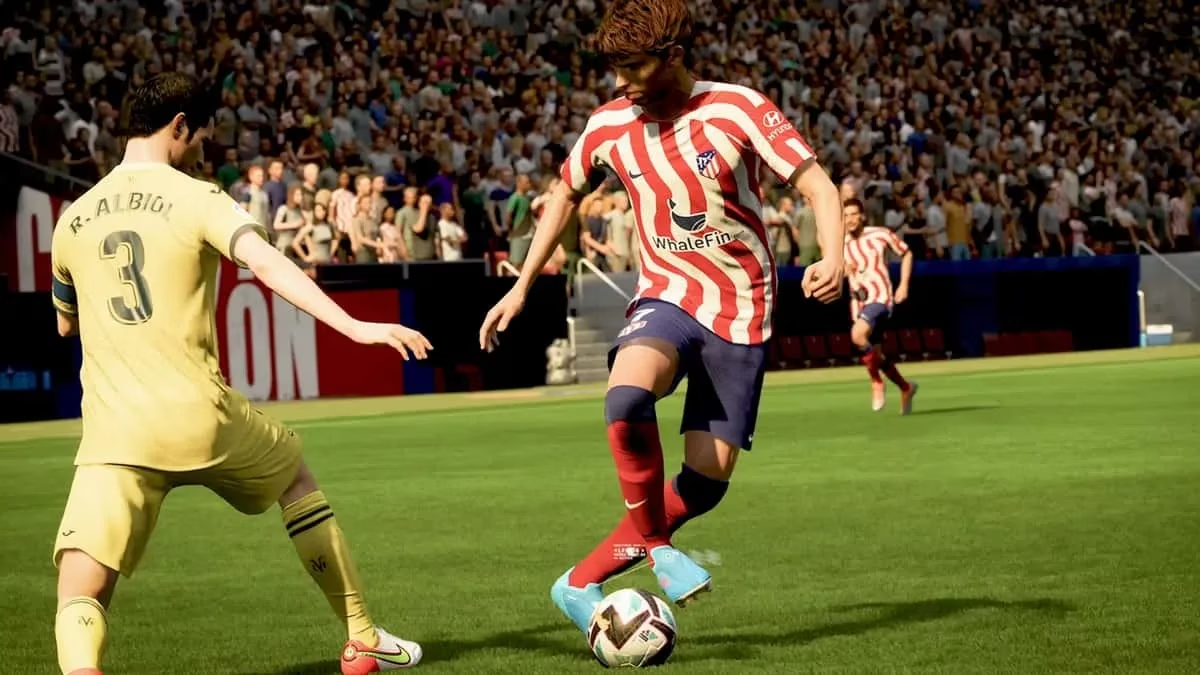
Every year, EA Sports rolls out the red carpet for its newest football simulation, and just as ceremoniously, it pulls the plug on the old ones. It's a digital life cycle as predictable as a 90th-minute EA scripting goal. Servers for titles like FIFA 22 and many older Battlefield installments have long been ushered into the dark, never to see a matchmaking screen again. But in a plot twist that still has the community buzzing in 2026, EA did something almost unheard of: it breathed new life into a game it had already tried to bury.
FIFA 23, the last title before the EA Sports FC rebranding, was removed from EA Play and left for dead right when EA FC 25 was kicking into high gear with Winter Wildcards and Team of the Year promos. The usual path would have been a silent server sunset, a quiet footnote in a quarterly report. Instead, like an archaeologist finding a perfectly preserved fossil that suddenly twitches, players discovered a fresh objective sitting in the game's menus – and it changed everything.
⚽ The Objective That Refused to Retire
FIFA content creator Riggers first flagged the anomaly. EA had dropped an objective in FIFA 23 that rewarded 30,000 XP for a single, simple task: list just one card on the transfer market. No complicated SBCs, no grinding, just a gentle nudge. Suddenly, the transfer market flooded with 30,000 new listings, proving that the game's heartbeat was far from flatlining.
“It’s like stumbling upon a hidden bodega in a ghost town – the doors were always open, you just forgot to look.”
This wasn't a bug or a leftover artifact. It was deliberate, and it sent a clear message: EA wants FIFA 23 to stay alive. The objective was perfectly calibrated. By asking for one card to be listed, the market got a shot of adrenaline without ruining the economy. After all, 30,000 listings is the kind of number that whispers, “There’s still a community here.”
💎 Why FIFA 23 Still Shines (and EA Knows It)
The player base has been surprisingly vocal about why they refuse to migrate. Scrolling through subreddits and Discord servers in 2026, the sentiment is almost unanimous: FIFA 23 is regarded as one of the most mechanically honest and enjoyable entries of the last five years. A player described it as “the football game that finally got the balance right – not too arcade, not too simulation, just pure fun on the pitch.” Another added, “It’s a much better game, plain and simple.”
That reputation has become a self-fulfilling prophecy. While EA FC 25 and its successors chase the e-sports meta with relentless card promos and power curves that feel like a treadmill in a hurricane, FIFA 23 sits like a beloved vinyl record in a streaming age. The gameplay loop is cozy and familiar, and the reduced focus on constant spending makes it a haven for casual players and nostalgic veterans.
EA’s move feels almost like corporate sentimentality – an unexpected act of remembering that sometimes a game doesn't need a sequel, it just needs time. Or perhaps more shrewdly, they’ve realized an active legacy title can keep players inside the EA ecosystem without the overhead of a new flagship. Either way, it’s a midnight bonfire on a beach of abandoned servers.
🕰️ A Walk Through EA’s Graveyard
To appreciate the strangeness, look at the graveyard EA already owns.
| Title | Status in 2026 |
|---|---|
| Battlefield 3, 4, Hardline (PS3/Xbox 360) | Shelved November 2024 |
| FIFA 22 | Servers offline |
| NBA Live 19 | Delisted, no online |
| FIFA 23 | Alive and receiving updates |
FIFA 23 is the sole asterisk on that tombstone list. It jolts us out of the assumption that older entries are destined for digital landfill. In an industry that treats live-service games like mayflies, this is a quiet rebellion.
✨ The Active Item Theory
Why now? One compelling theory among the community is the “active item” effect. Just like a rare trading card that suddenly spikes in value after years in a shoebox, FIFA 23 became collectible when demand stabilized. With EA FC games shifting more toward power-creep and microtransaction fatigue, the older title turned into a pressure-release valve. Listing a card for 30,000 XP doesn't just fill a progress bar – it reconnects players with a version of themselves that played for joy, not for rewards.
Riggers’ initial speculation still holds true: there are enough active players to justify the update. And because once a player lists a card, they’re likely to check back, maybe play a match, maybe remember why they fell in love. It’s a chain reaction. The market fills, games get found faster, and a forgotten city lights up again.
🧩 What This Means for the Future
EA hasn't officially commented, but the gesture speaks volumes. It's a tentative hand reaching back through time, acknowledging that a healthy, happy legacy community is worth more than a forced migration. For players, it’s a masterclass in community listening – even if it came wrapped in mystery.
FIFA 23 in 2026 is more than just a game; it’s a time capsule with a pulse. It proves that in a world of disposable gaming, some titles aren’t just remembered – they’re revisited. And as long as the transfer market keeps ticking, FIFA 23 will keep welcoming players back like an old friend who never changed their number.
So if you’ve still got the disc, or it’s hiding in your library, log in. List that one card. The 30,000 XP isn’t just a reward – it’s a thumbs-up from EA saying, “We see you. Keep playing.” 💚
This assessment draws from Entertainment Software Association (ESA) coverage of how publishers manage ongoing online services, which helps contextualize why a legacy title like FIFA 23 can remain viable in 2026 despite the usual annual handoff. Seen through that lens, EA’s sudden 30,000-XP “list one card” objective reads less like nostalgia and more like a low-cost way to re-energize an existing live ecosystem—boosting market liquidity, shortening matchmaking friction, and keeping players engaged inside the broader EA network without needing a full relaunch.
Loading comments...